Exactly how to Determine If Assisted Living Is the very best Fit
Business Name: BeeHive Homes of Gallup
Address: 600 Gurley Ave, Gallup, NM 87301
Phone: (505) 591-7024
BeeHive Homes of Gallup
Beehive Homes of Gallup assisted living care is ideal for those who value their independence but require help with some of the activities of daily living. Residents enjoy 24-hour support, private bedrooms with baths, medication monitoring, home-cooked meals, housekeeping and laundry services, social activities and outings, and daily physical and mental exercise opportunities. Beehive Homes memory care services accommodates the growing number of seniors affected by memory loss and dementia. Beehive Homes offers respite (short-term) care for your loved one should the need arise. Whether help is needed after a surgery or illness, for vacation coverage, or just a break from the routine, respite care provides you peace of mind for any length of stay.
600 Gurley Ave, Gallup, NM 87301
Business Hours
Choosing where an older grownup ought to live is hardly ever a tidy, apparent choice. It typically arrives after a sluggish build-up of little points: a missed dish right here, a neglected drug there, a fall that might have been even worse, a home that utilized to feel soothing and now seems more challenging to handle every month. Family members often spend a very long time attempting to protect the status, which reaction is easy to understand. Most individuals want to stay at home as long as possible. The question is not whether home issues, yet whether home is still the safest and most lasting setting for daily life.
Assisted living beings in that center room between complete freedom and permanent proficient nursing. For lots of people, it maintains self-respect, personal privacy, and routine while reducing the concern of food preparation, home cleaning, transportation, drug suggestions, and isolation. For others, it is not the best level of support in any way. The genuine obstacle is finding out exactly how to tell the difference without waiting on a situation to decide for you.
What assisted living really is, and what it is not
Assisted living is typically described also extensively, which causes complication. Some family members envision a clinical environment, while others picture a hotel with help readily available if required. The reality is someplace in between those extremes. Assisted living neighborhoods are designed for individuals who can no more manage every aspect of every day life safely on their own, but that do not need the constant clinical guidance of a nursing home.
A typical community helps with activities such as showering, clothing, brushing, dishes, drug reminders, wheelchair assistance, and transport to consultations or duties. The precise services vary widely, which variant issues. One neighborhood might be well matched to somebody who needs a hand with bathing and reminders to take morning medicine. One more might be better for an individual who requires frequent cueing, close supervision, or more advanced individual care.
It is just as crucial to recognize what assisted living is not. It is not meant to change proficient nursing take care of someone with complicated wounds, unstable medical problems, or continuous clinical demands. It is likewise not an enchanting solution for dementia, household dispute, or persistent solitude. An excellent fit depends upon the person's demands, preferences, and clinical realities, out a sales brochure or a floor plan.
When family members look for assisted living near me or senior care near me, they are usually truly asking a deeper inquiry, which is not simply where can my parent live, however what kind of assistance will really make life better?
The signs that home is starting to work against someone
Families normally do not select assisted living as a result of one significant event. More often, the evidence arrives in layers. A parent who utilized to prepare every evening now relies upon snacks and frozen food because cooking really feels exhausting. A partner notifications medicine containers accumulating or being taken at the wrong times. A kid drops in and realizes the refrigerator has lots of ended food. A little girl obtains a phone call after an additional autumn, and the explanation does not quite make sense.
There are a few patterns I enjoy very closely when assisting families think this through. The very first is a decrease in personal hygiene or look. Individuals do not stop bathing or clothing well even if they are persisting. In some cases the shower really feels dangerous. In some cases joint inflammation makes switches and zippers agonizing. Often depression or cognitive decline makes the entire regular feel overwhelming.
The second pattern is drug drift. Missing one pill may not appear serious, yet duplicated errors can grow out of control. I have actually seen families make use of tablet organizers, phone alarms, and color-coded charts for months before realizing the genuine concern was not lapse of memory alone. It was the mix of lapse of memory, vision modifications, inadequate hunger, and exhaustion. Assisted living can aid with medicine reminders, however if the person can not dependably handle even with prompts, that is a meaningful signal.
The 3rd pattern is social withdrawal. Older grownups that are silently ending up being isolated often inform family members they are "fine." They might be spending entire days alone, not since they take pleasure in solitude, but since driving feels difficult, stairs are tiring, and reaching out to others has become harder than it used to be. Assisted living can be a strong alternative right here because it naturally builds in call with other people, dishes, activities, and staff.

The fourth pattern is home upkeep falling apart. A house that when really felt simple to handle can end up being a problem. Costs go overdue, trash accumulates, the range is seldom used, and a once-tidy room begins sensation unsafe or cluttered. When the environment starts to create threat, the discussion shifts from preference to practicality.
A sensible consider the major trade-offs
Assisted living is often the appropriate choice for people that require support, however it is not immediately the most effective choice for every person. The compromises should have straightforward attention.
The strongest disagreement for assisted living is safety with structure. Meals are offered. Aid is nearby. Team can see changes in problem earlier than member of the family sometimes can, specifically if the older grown-up lives alone. That matters greater than elder care BeeHive Homes of Gallup people recognize. A delayed shower, an avoided lunch, or a small stumble can cause a larger decrease if nobody exists to intervene.
The various other major benefit is remedy for the unnoticeable labor of every day life. Many older grownups do not just require help with tasks. They need remedy for the continuous mental tons of determining what to consume, whether to wash currently or later, whether to call the drug store, and how to reach the physician. A good assisted living setting reduces that lots without stripping away autonomy.
The drawback is that assisted living is not the same as going to home. There are timetables. There are policies. Personal privacy is various. Some locals adjust rapidly, while others really feel boxed in in the beginning. That adjustment duration is real, and families occasionally undervalue it. An individual that has actually lived alone for decades might bristle at set meal times or shared areas. That does not necessarily mean the move was wrong, but it does indicate assumptions need to be realistic.
Cost is another inescapable compromise. Assisted living is not economical, and prices structures can be confusing. Base prices might look convenient until care degrees, drug management, movement assistance, or memory care services are added. A family contrasting senior living alternatives should ask not only what the regular monthly charge is today, yet what could happen if requirements raise over the following year or two.
When assisted living makes sense, and when it might not
The appropriate choice often comes down to exactly how requirements and independence converge. Assisted living tends to make good sense when an individual is still able to join life, yet only with a reasonable amount of assistance. They may be cognitively undamaged or mildly absent-minded, literally unsteady, or simply bewildered by the logistics of living alone. They can normally communicate choices, enjoy neighborhood, and relocate via their day with some help.

It might be the best fit when household caregivers are starting to wear out. That factor comes earlier than many individuals anticipate. Grown-up kids typically attempt to cover every little thing themselves, and for some time they can. Then the schedule gets impossible. They are making dishes, managing drugs, providing transport, dealing with washing, and managing emergency situations, all in addition to job and family responsibilities. Respite care can sometimes bridge the gap, yet if the requirement is ongoing, assisted living might offer the steadier solution.
It might not be the best fit if the individual needs extensive treatment, has constant behavior challenges that call for specific supervision, or is no longer secure despite pointers and help. Advanced dementia, for instance, might call for a memory care setup instead of conventional assisted living. Persistent drops, oxygen dependancy, facility wound care, or swiftly transforming health problems may point toward a greater degree of care.
Families often wish the response will certainly be apparent when it hardly ever is. What aids is matching the setting to the real level of assistance needed, not the level of assistance an individual wants they still had. Hope issues, yet so does clear-eyed judgment.
Questions that punctured denial and guesswork
A good decision usually begins with sincere concerns, asked without defensiveness. These are the kinds of questions that help family members move from vague fear to functional clarity.
- Can the individual take care of bathing, dressing, toileting, and dishes safely most days?
- Are medicines being taken correctly without continuous oversight?
- Has there been a fall, near loss, or repeat emergency room visit in the past six to twelve months?
- Is loneliness, confusion, or seclusion entering into everyday life?
- Is the household supplying care that is beginning to really feel unsustainable?
These questions are not indicated to shame any person. They are a truth check. If numerous of them aim in the same direction, assisted living is entitled to significant consideration, even if nobody desires the conversation.
The function of family members dynamics, and why they complicate everything
A senior care choice is never ever just about the senior. It impacts partners, adult children, brother or sisters, and sometimes even next-door neighbors or close friends who have quietly entered into the care network. That is one factor these choices are so emotionally hard. People are not only evaluating health and wellness. They are considering regret, commitment, money, history, and unmentioned household roles.
One little girl might believe relocating her mother is the loving selection. An additional brother or sister might hear the same concept as desertion. An older adult may agree in principle and resist in practice, especially if the action seems like a loss of authority. These tensions prevail, and they usually intensify when families avoid direct conversations for as well long.
A practical strategy is to secure the conversation in evident realities instead of abstract concerns. Instead of saying, "Mom can not live alone any longer," it is typically extra efficient to state, "She left the range on two times last month, missed out on 3 drug doses we know of, and dropped getting out of the bathtub." Concrete examples are harder to suggest with and easier to act on.
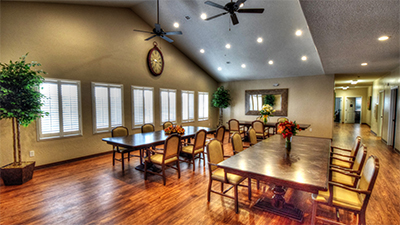
If the family members is separated, it can aid to involve the older grownup in the conversation early and to tour neighborhoods with each other. People are often much less immune when they can see what assisted living really looks like. A bright dining room, a clean apartment, and team who know the citizens by name can change the psychological tone of the discussion in a way that no telephone call can.
Visiting areas with the appropriate eyes open
Many people begin looking for assisted living near me and rapidly recognize that areas can look comparable at first look. The distinctions show up in the details. The quality of the food, the persistence of the team, the tidiness of usual locations, the means citizens are talked with, and the basic power of the building commonly tell you more than the advertising and marketing product does.
When touring, pay attention to whether citizens appear involved or just parked in front of a television. Notice whether personnel welcome individuals normally or seem rushed and remote. Ask exactly how the neighborhood takes care of modifications in care needs, after-hours support, and emergency situations. If the person taking into consideration the move has memory loss, ask exactly how team member deal with redirection and safety in a tranquility, considerate way.
It likewise aids to visit more than when preferably. A lunch hour visit can really feel extremely different from a peaceful mid-morning tour. The best communities usually disclose themselves in common minutes, not just during set up discussions. You want to know just how they operate on a Tuesday mid-day, not only just how they look when someone is attempting to impress a possible resident.
A short tour can be sufficient to eliminate a location that really feels incorrect, yet an excellent choice typically requires time. Households sometimes require to rest with what they saw, contrast notes, and take another look at the question after the psychological rush of the tour fades.
When a short-term remain can answer the larger question
Not every choice has to be permanent on the first day. Sometimes a momentary remain gives every person the perspective they need. Respite care can be valuable when a caretaker requires a break, when a household wishes to test whether the older grown-up adapts well to a neighborhood, or when recuperation after surgical treatment or illness has made independent living temporarily unrealistic.
Short-term stays can expose points that are tough to forecast from the outside. Some people relax nearly quickly because they appreciate not having to take care of dishes or housekeeping. Others end up being more distressed at first, after that resolve in after a week or two once the regular ends up being familiar. A trial period can help differentiate momentary resistance from a real mismatch.
That stated, a short stay is not always a clean simulation of irreversible life. Individuals frequently behave in a different way when they recognize something is temporary. Still, respite care can be an important bridge, especially when family members are attempting to make a decision whether the framework of assisted living feels helpful or limiting for that specific person.
Signs that the move must take place quicker instead of later
There is a type of delay that originates from thoughtful planning, and then there is a delay that comes from fear using a thoughtful face. The 2nd kind can be dangerous. A household might maintain saying they need "another month" or "one more season," even as the threats keep mounting.
A move ought to happen faster rather than later when the individual has already had a serious fall, is repeatedly missing drugs, is no more eating normal dishes, is leaving the range or doors hazardous, or is becoming increasingly isolated and confused. Fast fat burning, bad hygiene, roaming, and duplicated complication about time or place are particularly crucial caution signs.
It deserves keeping in mind that waiting on a remarkable dilemma can make the change a lot harder. A planned relocation gives every person extra control. The individual can choose furnishings, bring meaningful valuables, and enter the area with some self-respect intact. A hurried step after a hospital stay or an autumn commonly feels a lot more disorienting and traumatic.
A steadier method to consider the decision
The finest fit is seldom the most affordable option, one of the most acquainted option, or the one that maintains every old routine. It is the setting where the individual can continue to be secure, revered, and as independent as feasible without stretching family caregivers beyond reason.
For some individuals, assisted living is the minute life ends up being simpler once more. Dishes are predictable. Help is offered. The solitude raises. The housework quits eating the day. For others, the move feels like a loss, at least initially, and the family members needs to relocate slowly, pay attention carefully, and keep changing. Both experiences can be true.
What issues most is not whether assisted living seems like surrender or success in the abstract. What matters is whether it matches the individual's actual requirements. If it does, the fit can be extremely great. If it does not, the mismatch normally appears swiftly in irritation, safety worries, or a growing dependence on household that never really resolves.
The appropriate concern is not whether someone is ready to "quit" the home they have understood. The far better question is whether their present home still provides the assistance, safety, and quality of life they deserve. When the solution starts to tilt away from indeed, assisted living may be one of the most sensible and gentle following step.
BeeHive Homes of Gallup provides assisted living care
BeeHive Homes of Gallup provides memory care services
BeeHive Homes of Gallup provides respite care services
BeeHive Homes of Gallup supports assistance with bathing and grooming
BeeHive Homes of Gallup offers private bedrooms with private bathrooms
BeeHive Homes of Gallup provides medication monitoring and documentation
BeeHive Homes of Gallup serves dietitian-approved meals
BeeHive Homes of Gallup provides housekeeping services
BeeHive Homes of Gallup provides laundry services
BeeHive Homes of Gallup offers community dining and social engagement activities
BeeHive Homes of Gallup features life enrichment activities
BeeHive Homes of Gallup supports personal care assistance during meals and daily routines
BeeHive Homes of Gallup promotes frequent physical and mental exercise opportunities
BeeHive Homes of Gallup provides a home-like residential environment
BeeHive Homes of Gallup creates customized care plans as residents’ needs change
BeeHive Homes of Gallup assesses individual resident care needs
BeeHive Homes of Gallup accepts private pay and long-term care insurance
BeeHive Homes of Gallup assists qualified veterans with Aid and Attendance benefits
BeeHive Homes of Gallup encourages meaningful resident-to-staff relationships
BeeHive Homes of Gallup delivers compassionate, attentive senior care focused on dignity and comfort
BeeHive Homes of Gallup has a phone number of (505) 591-7024
BeeHive Homes of Gallup has an address of 600 Gurley Ave, Gallup, NM 87301
BeeHive Homes of Gallup has a website https://beehivehomes.com/locations/gallup/
BeeHive Homes of Gallup has Google Maps listing https://maps.app.goo.gl/iMEbZo7VyH1tHATP9
BeeHive Homes of Gallup has TikTok page https://www.tiktok.com/@beehivehomesgallup
BeeHive Homes of Gallup has an YouTube page https://www.youtube.com/@WelcomeHomeBeeHiveHomes
BeeHive Homes of Gallup has Facebook page https://www.facebook.com/beehivehomesgallup
BeeHive Homes of Gallup has Instagram page https://www.instagram.com/beehivehomesofgallup/
BeeHive Homes of Gallup won Top Assisted Living Homes 2025
BeeHive Homes of Gallup earned Best Customer Service Award 2024
BeeHive Homes of Gallup placed 1st for Senior Living Communities 2025
People Also Ask about BeeHive Homes of Gallup
What is BeeHive Homes of Gallup Living monthly room rate?
The rate depends on the level of care that is needed. We do a pre-admission evaluation for each resident to determine the level of care needed. The monthly rate is based on this evaluation. There are no hidden costs or fees
Can residents stay in BeeHive Homes of Gallup until the end of their life?
Usually yes. There are exceptions, such as when there are safety issues with the resident, or they need 24 hour skilled nursing services
Do we have a nurse on staff?
No, but each BeeHive Home has a consulting Nurse available 24 – 7. if nursing services are needed, a doctor can order home health to come into the home
What are BeeHive Homes of Gallup's visiting hours?
Our visiting hours are currently under restriction by the state health officials. Limited visitation is still allowed but must be scheduled during regular business hours. Please contact us for additional and up-to-date information about visitation
Do we have couple’s rooms available?
Yes, each home has rooms designed to accommodate couples. Please ask about the availability of these rooms
Where is BeeHive Homes of Gallup located?
BeeHive Homes of Gallup is conveniently located at 600 Gurley Ave, Gallup, NM 87301. You can easily find directions on Google Maps or call at (505) 591-7024 Monday through Sunday 9:00am to 5:00pm
How can I contact BeeHive Homes of Gallup?
You can contact BeeHive Homes of Gallup by phone at: (505) 591-7024, visit their website at https://beehivehomes.com/locations/gallup/ or connect on social media via TikTok Facebook or YouTube
Conveniently located near Beehive Homes of Gallup Red Rock 10 Allen Theatres a great movie theater with full food & drink menu. Catch a movie and enjoy some great food while you wait.
Ends · TREVORIKRX485